Electrical Fault Finding London

Diligent Electrical Contractors is your trusted Electrical Fault Finding in London.

NICEIC & Part P certified

Same-day emergency repairs

Commercial & Residential cover

Electrical Fault Finding in London

What do we do when you book electrical fault finding in London?

We diagnose the cause of the fault, make the circuit safe, fix the issue, then re-test to confirm normal operation.
Electrical fault finding in London is not guesswork, it’s a structured process using calibrated test equipment, targeted checks, and clear fault isolation so you get a safe and lasting repair.
warning signs that you need fault finding

What are the warning signs that you need fault finding?

Repeated tripping, flickering lights, dead sockets, sparks, buzzing, or a burning smell are signs you should book a diagnostic visit.
These symptoms often point to overloaded circuits, loose connections, damaged wiring, insulation breakdown, ground faults, or short circuits. If the issue is intermittent, circuit tracing and step-by-step testing is usually the fastest way to locate the fault without unnecessary disruption.

Book fault finding if you notice:

  • RCD keeps tripping or breakers trip repeatedly.
  • Lights flickering or dimming.
  • Power loss in part or all of the property.
  • Buzzing or humming at sockets, switches, or the consumer unit.
  • Burning / fishy smell or warmth around fittings.
  • Sparking socket or scorch marks.
  • Electric shock or tingling from a fitting or appliance.

Feel Free To Contact Us

If you have any questions or you are ready to book an electrical service? Get in touch with Diligent Electrical Contractors today!
common electrical faults

What are common electrical faults we diagnose and fix?

Most faults come from overloaded circuits, faulty wiring, short circuits, ground faults, insulation issues, or failing components.
These are the patterns we see during electrical fault finding in London across homes, rentals, and commercial sites:

  • Overloaded circuits and nuisance tripping.
  • Loose connections and heat damage.
  • Short circuits and electrical surges.
  • Ground faults / grounding issues.
  • Insulation degradation / insulation breakdown.
  • Arc faults (arcing at a connection or fitting).
  • Faulty sockets, switches, light fittings, drivers/transformers.
  • Consumer unit / fuse board faults (breakers and RCD issues).
  • Voltage drop / inconsistent voltage on a circuit.

How do our electricians find the fault?

We use a structured test-and-isolate method: confirm symptoms, inspect, test, trace, repair, then re-test.
This approach prevents repeat faults and reduces disruption, especially when faults are intermittent.

01

How do we confirm what’s actually happening?

We identify the exact symptom and when it occurs, then narrow it to a circuit or location. This includes what trips, what stops working, what was recently added, and whether the issue is constant or intermittent.
02

How do we spot obvious risks early?

We check for heat marks, loose fittings, damp-related issues, burning smells, and visible damage before deeper testing. A quick visual inspection often finds high-risk problems like overheating connections, damaged accessories, or water ingress.
03

How do we test safely and accurately?

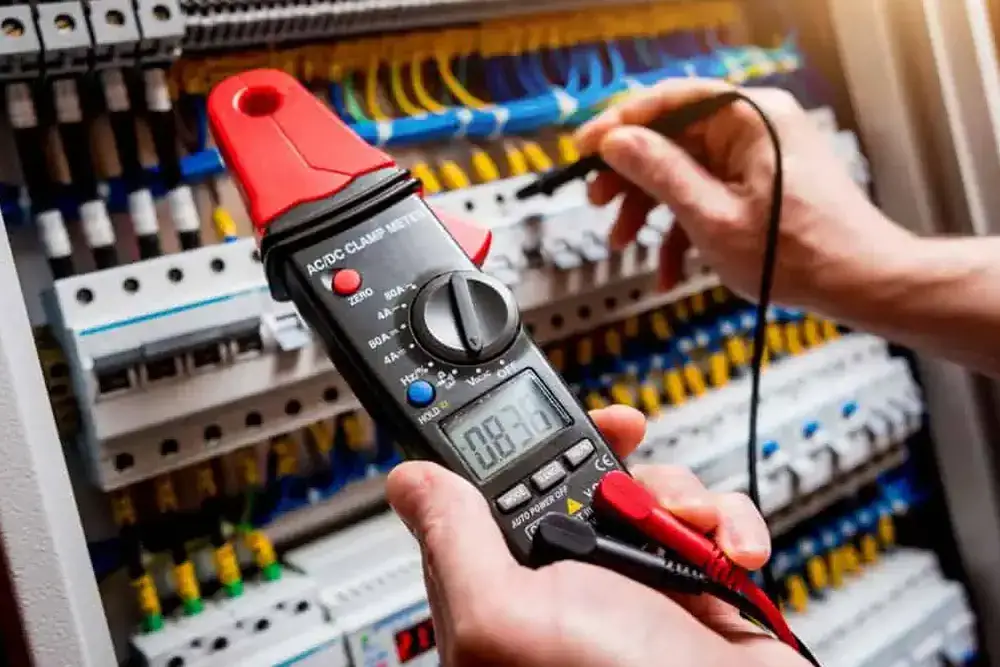
We test with calibrated test equipment to measure and isolate the problem. This can include multimeter checks, circuit measurements, and targeted testing to pinpoint whether the fault is in a fitting, connection point, or fixed wiring.
04

When do we use insulation testing?

We use insulation testing when faults suggest leakage, damp impact, or insulation breakdown that causes RCD trips. Insulation testing helps locate degraded cable sections or damaged circuits that can’t be confirmed by visual checks alone.
05

What is circuit tracing and why does it matter?

Circuit tracing identifies the route of the circuit and helps isolate the fault to a specific section. This is especially useful when sockets or lighting circuits run through multiple rooms, or when only part of a circuit is affected.
06

When is thermal imaging useful?

Thermal imaging is useful when overheating is suspected and we need to locate hot spots without dismantling everything. A thermal camera can highlight abnormal heat at connections, breakers, or accessories, then we confirm with electrical testing before repair.
07

What happens after the repair?

We re-test the circuit and confirm safe operation before we leave. Post-repair testing reduces repeat call-outs and confirms the fault detection and repair work has solved the issue.
components we check during fault finding

What areas and components do we check during fault finding?

We focus on the circuit and components linked to the symptom, then confirm protection and safe operation.
Faults commonly sit in accessories, connection points, or the consumer unit, so we check what’s relevant to the issue.

Typical checks include:

  • Consumer unit / fuse board, breakers, and RCD protection.
  • Socket circuits and lighting circuits.
  • Switches, sockets, fittings, and connection points.
  • Drivers/transformers (where installed).
  • Loads connected to the circuit (to rule out a faulty appliance)

We offer free quotations on jobs

30 min response time on jobs (within 3 mile radius)

We cover London and surrounding areas

Competitive pricing

Public liability insurance (up to £2,000,000)

100% customer satisfaction

Do we provide fault finding for homes, landlords, and businesses?

We provide fault diagnosis and repairs for domestic, landlord, and commercial properties across London.
The method stays the same, safe isolation, accurate testing, circuit tracing, and full re-testing, but the reporting and access requirements can differ by property type.

What does fault finding look like for homeowners?

You get a clear diagnosis, safe repair, and confirmation that the circuit is stable again. This is ideal for tripping circuits, flickering lights, dead sockets, and power loss.

What does fault finding look like for landlords and letting agents?

You get a fast diagnosis that helps resolve tenant issues and reduce downtime. If you also need an EICR, we can advise on the right next step after the fault is resolved (and we can link this to your EICR service page).

What does fault finding look like for commercial sites?

You get priority on safe isolation, minimal disruption, and efficient restoration of power. This supports offices, shops, restaurants, and other sites where downtime impacts operations.

When is electrical fault finding an emergency?

Sparks, burning smells, electric shocks, or total power loss should be treated as urgent. These signs can indicate overheating connections, insulation breakdown, or dangerous faults that need immediate isolation and professional testing.

Switch Off

Switch off the affected circuit at the consumer unit only if safe

Unplug Devices

Unplug devices on that circuit

Avoid Testing

Avoid using the socket/fitting until tested

Call For Emergency

Call a qualified electrician for emergency fault diagnosis and repairs

Worked for Hundreds of Satisfied Customers 
5.0
Based on 51 reviews
powered by Google

How is fault finding priced?

Fault finding is typically priced as diagnosis-first, then repair costs depend on what we find. Some faults are solved quickly; others take longer when they’re intermittent or hidden. A clear diagnostic approach avoids replacing parts blindly and keeps the repair focused.
01

Explanation

We will explain what caused the issue.
02

Confirmation

We will recommend and carry out the repair option that removes the electrical risk.
03

Repairing & Testing

We will re-test after repair and confirm the circuit is stable.

members

Frequently asked questions

What is electrical fault finding?
Electrical fault finding is the process of locating the exact cause of an electrical problem so it can be repaired safely and tested properly. It often involves inspection, testing, insulation testing where needed, and circuit tracing to isolate the fault without unnecessary disruption.
RCD tripping is usually caused by a ground fault, moisture, insulation breakdown, or a faulty appliance on the circuit. An RCD is designed to cut power quickly when it detects leakage current. During electrical fault detection and repair, we isolate the circuit, test sections, and identify whether the fault is in fixed wiring, a fitting, or a connected load.
Flickering lights are commonly caused by a loose connection, a failing fitting/driver, or voltage fluctuations on the circuit. If the flicker happens across multiple rooms or continues after changing lamps, the issue may be inside the lighting circuit or at connection points. Electrical fault diagnosis helps identify whether it’s a local fitting issue or a wider circuit problem.
A burning or fishy smell usually means overheating wiring, damaged insulation, or a loose connection that is arcing. This is a safety issue. Stop using the affected socket/circuit and get it checked. Thermal imaging can sometimes help identify overheating points quickly, but the fix still needs proper testing and safe repair.
A circuit can trip due to overload, a faulty appliance, a short circuit, or leakage that triggers the RCD. We isolate the circuit and check whether the issue is the appliance, a socket circuit fault, or wiring/connection damage.
A faulty socket can cause RCD tripping if there’s moisture, heat damage, loose connections, or leakage to earth. Testing and inspection confirm whether the fault is at the socket or elsewhere on the circuit.
Many faults can be repaired on the day once identified. If parts are needed or access is restricted, we’ll explain the next steps and give a clear plan to complete the repair.